Kiive Audio KStrip Review — Three Console Flavors in One Plugin
Neve warmth, API punch, SSL precision — all inside a single channel strip plugin. Here is how KStrip holds up in real mixing sessions.
Introduction: Classic Console DNA, Modern Plugin Mindset
The plugin market is saturated with console emulations. Neve, API, and SSL clones exist in every price range, from budget bundles to thousand-dollar UAD cards. What Kiive Audio did with KStrip is different — rather than emulating one piece of gear, they combined three iconic channel strips into a single interface and made them switchable on the fly.
The result is a plugin that draws from the Neve 1063, API 550B, and SSL E-series — covering harmonic warmth, mid-forward aggression, and fast transparent control within one strip. The real question is whether mixing and matching these flavors produces something genuinely useful, or just a compromise that does nothing particularly well.
After putting it through several full mixing sessions across different genres, here is the honest verdict.

Design and Workflow: Familiar Feel, Flexible Setup
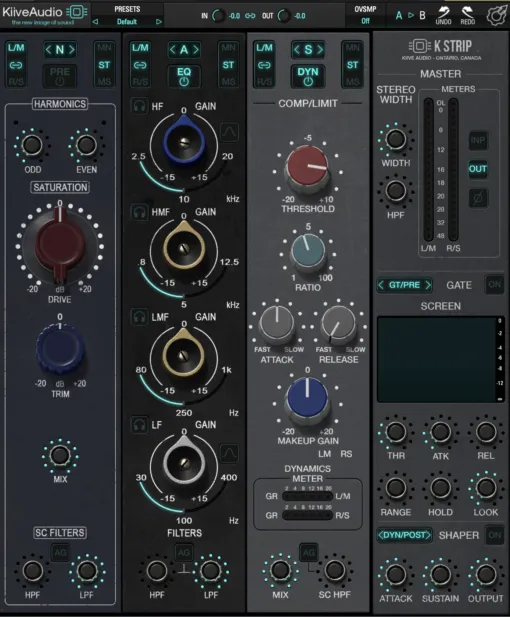
Loading KStrip for the first time, the layout is immediately readable. Everything flows left to right — saturation and preamp on the far left, EQ in the middle, compression and dynamics on the right. Each major section has a mode selector: N for Neve, A for API, S for SSL. These work independently, so you can run a Neve preamp into an API EQ and finish with an SSL compressor.
This independence is what makes KStrip genuinely flexible rather than just a feature list. In practice, the Neve saturation into SSL compression combination proved particularly useful on electric guitars — the warmth of the preamp stage combined with the fast, transparent limiting of the SSL section produced a polished result without requiring multiple plugins.
Advanced features like odd/even harmonic blend, sidechain filters, and stereo width control are all on the surface. No hidden menus. The workflow stays fast even when you are experimenting.
Saturation Section: Console Color on Demand
The saturation section offers a trim control, a mix knob, and the three console flavors. Each brings a distinct character.
The Neve setting is warm and rounded — useful for adding body to vocals or softening harsh top end. The API setting pushes aggressively in the mids, delivering that forward, slightly edgy tone that cuts through dense arrangements. The SSL flavor sits between the two — tighter, more focused, noticeably cleaner.
The odd vs. even harmonics toggle adds useful range. Even harmonics sound smoother and more musical. Odd harmonics bring bite and character. Combined with the mix control, this gives a surprisingly wide palette from a section that looks simple at first glance.
Built-in sidechain filters prevent the low end from hitting the saturation circuit too hard — practical when driving something without muddying the bottom. A detail that saves a separate high-pass insert on many tracks.
EQ Section: Three Distinct Tonal Profiles
The EQ module delivers three classic styles with genuinely different behavior — not just different cosmetics on the same curve.
- N Mode (Neve 1063) — Four bands including dual mids. Smooth, musical, forgiving. Works well on vocals, overheads, and mix bus tone shaping. Boosts feel natural rather than surgical.
- A Mode (API 550B) — Aggressive, mid-forward, punchy. The four-band layout matches the 550B closely. Excellent on drums and vocals that need to cut through. The API character is convincing.
- S Mode (SSL E-series) — Tight and precise. Less colored, more controlled. Ideal for cleanup, notching harshness, or adding snare crack without adding weight. The most surgical of the three.
All three share a consistent physical layout, so switching between them mid-session does not disrupt the workflow. The muscle memory transfers immediately.
Compression Section: Familiar Behaviors, Subtle Differences
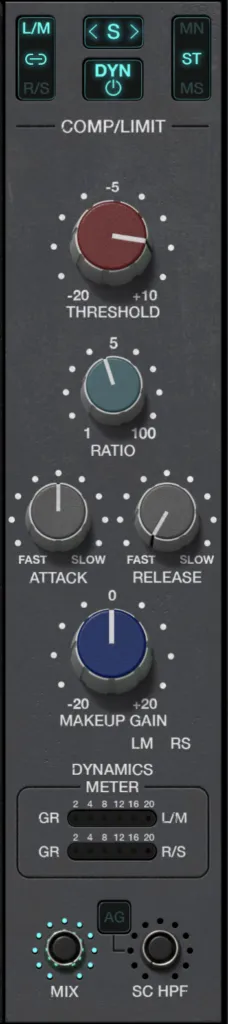
The three compression models follow the same switchable approach as the EQ, and each has recognizable behavior.
N Mode feels soft and gluey — rounding things out rather than clamping down. Useful on mix bus or backing vocals where cohesion matters more than control. A Mode delivers API-style punch with feedforward and feedback options and an adjustable knee. Quick and controlled, it adds presence and grip on drums and vocals. S Mode is fast and transparent — SSL-style snappy transient response, particularly effective on snares.
Testing each at identical settings — 4:1 ratio, medium attack, fast release — the tonal differences were clear but not dramatic. The API brought the most mid-forward energy. SSL had the crispest transient snap. Neve sat back and smoothed. All three behaved consistently with what you would expect from the gear they reference.
Gate, Shaper, and Master Section
The gate includes threshold, attack, release, range, hold, and a lookahead function — uncommon in channel strip plugins. Visual feedback shows exactly when the gate opens and closes, similar to dedicated gate plugins. On live drum recordings, this level of visibility is genuinely useful for taming bleed without guessing.
The transient shaper offers attack and sustain controls. Subtle by design, but convenient when you want a kick to hit a little harder or a snare tail to extend slightly without adding a separate insert.
The master section includes stereo width with a dedicated high-pass filter for the width processing — keeping the low end tight and mono while spreading the top. Mid/side EQ and compression are also available for engineers who work that way on mix bus or production chains.
How Close Is Close Enough?
The N mode EQ compares well against UAD's 1081 — not an identical match, but tonally in the same family. Smooth highs, slightly rounded mids, a usable low shelf. Swapping between them in a mix without dramatic surprise is a reasonable test, and KStrip passes it.
The A mode against Waves API 550B at matched settings showed close results with a slight difference in low-end weight — nothing that would change a mix decision. The SSL comparison held up similarly. These are not perfect clones, and they are not marketed as such. In a full mix, the differences are subtle enough that most listeners would not identify them.
For engineers who need the absolute exact response of a specific vintage unit, dedicated emulations from UAD or Universal Audio remain the reference. For engineers who want the tonal character and workflow benefits without the cost or platform restrictions, KStrip delivers convincingly.
Final Verdict
KStrip is a practical, musical channel strip that delivers real-world tone across three console styles without requiring separate plugins for each. The ability to mix and match saturation, EQ, and compression flavors independently is a genuine workflow advantage rather than a marketing feature.
It will not replace dedicated high-end emulations for engineers who need exact vintage accuracy. But for sessions where you want console character, dynamic control, and tonal flexibility in a single insert — KStrip earns its place in the chain.
Not sure what your track needs?
Send it and hear a free 60-second preview — an honest assessment and an exact price, no commitment.
Get a Free Preview →Want your track to sound like this?
Send it in and get a free preview — hear the difference on your own song before you pay anything.
Get a free preview →