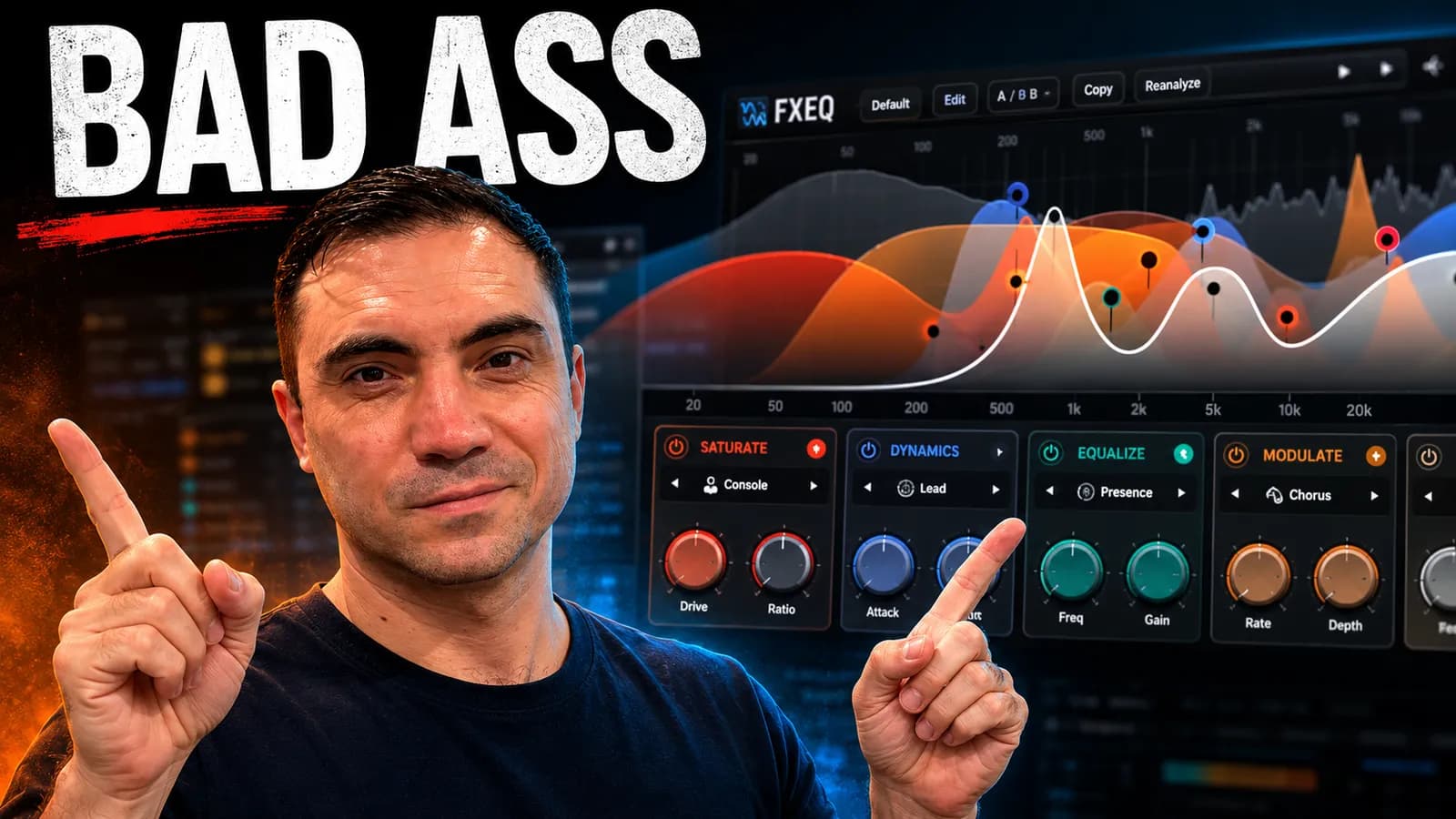
iZotope FXEQ Review — Frequency-Specific Effects for Mixing
Every now and then a plugin drops that makes you stop and say — that is genuinely new. iZotope FXEQ is one of those. It takes tone-shaping and flips it entirely, letting you boost effects at specific frequencies rather than the audio signal itself.
What Is iZotope FXEQ?
At its core, FXEQ combines five effect modules — Saturation, Reverb, Delay, Modulation, and Lo-Fi — with a fully functional parametric EQ. The twist is that instead of boosting or cutting the audio signal itself, the EQ boosts the effects. Want reverb only at 1kHz? Or saturation only in the low mids without touching the top end? FXEQ makes that possible.
Everything runs in parallel — the dry signal stays intact while the processed signal is blended in. It functions like setting up multiple effect sends, except everything happens inside one interface. For mixing and mastering work where precision and creativity need to coexist, this is a genuinely useful concept.
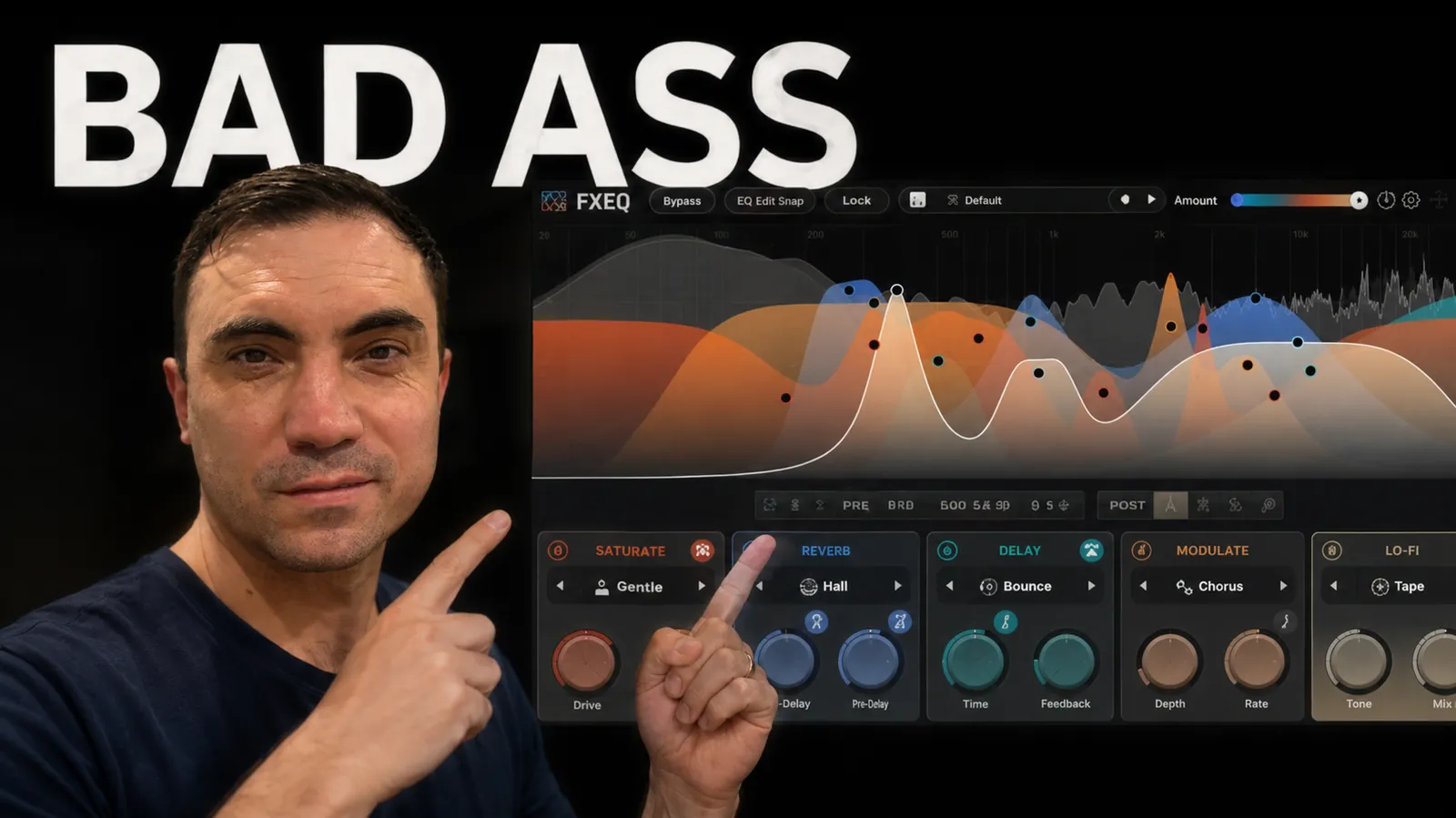
The Five Modules
Saturation
Multiple flavors including Tape and Create modes. Adds warmth, grit, or harmonic sparkle at whatever frequency you target.
Reverb
Hall, Chamber, and Plate. Each can be timed to the track tempo and shaped to specific frequency ranges.
Delay
Classic, Reverse, and Crunch modes for rhythmic movement or experimental texture without affecting the full spectrum.
Modulation
Four flavors including a doubler for widening vocals and guitars at precisely the frequencies that need it.
Lo-Fi
Cassette, Radio, Vinyl, and Tape characters for nostalgic texture or deliberate imperfection in specific bands.
The EQ That Controls Effects
The EQ section works like any familiar parametric — drag nodes, adjust Q, boost or cut. The difference is that each colored node corresponds to an effect module and applies that effect only to that part of the frequency spectrum.
In practice this means you can add Tape saturation only to the low mids, apply reverb to the high end while leaving the low end dry, or combine delay bands at different frequencies for a rhythmic stereo spread. Each of these would normally require multiple insert chains and send routing — FXEQ handles all of it in one place.
Additional tools include an FX Only mode for delta listening — hearing precisely what is being added — a limiter to prevent extreme effects from overloading the mix bus, and an Amount control that acts as a global wet/dry knob.
In Practice — Guitars
On an acoustic guitar track the frequency-specific approach immediately showed its value. Harmonic saturation in the upper mid range added presence and life without touching the warmth of the lower frequencies. A plate reverb targeted at the top end added air and dimension while the body of the guitar remained dry and focused.
The bypass comparison made the difference obvious — FXEQ took the guitar from competent to three-dimensional in a way that would have required several plugins and careful routing to achieve through conventional means. For arrangement work where guitar layers need to occupy space without cluttering the mix, this kind of targeted processing is valuable.
In Practice — Vocals
Vocals are where FXEQ's frequency-specific approach is most immediately useful. The ability to add saturation to the presence range without affecting the body of the voice — or to apply reverb only to the upper harmonics while keeping the fundamental dry — solves problems that appear in almost every vocal mix.
The pre-delay and reverb decay timing options sync to BPM, which keeps effects feeling like part of the performance rather than something sitting on top of it. Combined with the modulation module for gentle stereo width, a complete vocal treatment is achievable within FXEQ alone.
Other Useful Applications
- Drums — Parallel saturation on the snare while adding reverb only to the overhead frequencies. The kick and low drum body remain dry and punchy while the upper presence gets treated independently.
- Full mix processing — Creative Lo-Fi treatments applied only during breakdown sections by automating the Amount control. The transition from clean to degraded and back becomes a compositional tool.
- Bus processing — Used as a send/return in FX Only mode, FXEQ becomes a creative parallel effects chain that adds dimension to grouped tracks without altering the dry signal at all.
Final Verdict
iZotope FXEQ is a genuinely new approach to effects processing — not another emulation of existing hardware, but a plugin that does something conceptually different. The frequency-specific effects application solves real mixing problems while opening creative possibilities that conventional signal chains cannot easily replicate.
It is fun to use in a way that most professional tools are not. That matters — tools that spark ideas and invite experimentation tend to produce better results than tools that just process. FXEQ belongs in a professional mixing toolkit.
Strengths
Genuinely novel concept, practical on guitars and vocals, creative Lo-Fi modes, good BPM sync
Limitations
Learning curve for the EQ-as-effect-control paradigm, can be easy to over-process
Want to hear what creative mixing can do for your track?
Send your recording and we will show you. First consultation is always free.
Get in Touch →Want your track to sound like this?
Send it in and get a free preview — hear the difference on your own song before you pay anything.
Get a free preview →