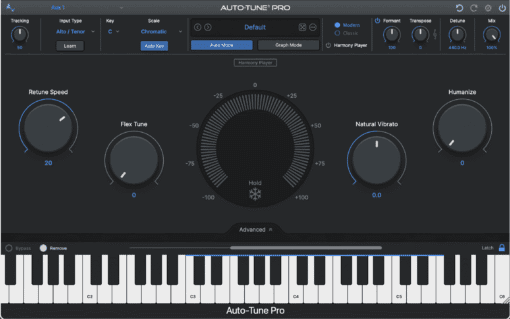
Is Auto-Tune Still Worth It in 2025?
Auto-Tune has been the go-to pitch correction tool for decades. But reliability issues, licensing problems, and strong competition have changed the conversation — here is an honest look at where things stand.
The Plugin That Started as an Oil Drill
Before Auto-Tune existed, there was a geophysicist named Dr. Andy Hildebrand working for Exxon. His job was to use autocorrelation algorithms to analyse seismic waves and find underground oil deposits. At a dinner party in 1996, a guest joked that he should "make a box that would allow her to sing in tune." He took it seriously.
In 1997, Antares Audio Technologies released Auto-Tune. Its original purpose was simple and invisible — correct slightly off-key vocal notes so subtly that nobody would notice. For the first year, it worked exactly as intended. Engineers quietly used it on sessions, listeners had no idea it existed, and everyone was happy.
Then Cher happened.
For her 1998 track Believe, producer Mark Taylor set Auto-Tune's retune speed to zero — essentially asking the plugin to snap every note instantly to the nearest pitch with no transition whatsoever. The result was that unmistakable robotic warble: "Do you beli-i-i-ieve in life after love." Cher apparently loved it. Her label did not. She reportedly told them: "You can change it over my dead body." The track sold over ten million copies and became the best-selling single of 1998.
Dr. Hildebrand's reaction? "I almost didn't put that feature in the software. But I was told, 'Why not, you know? It won't hurt.'" He later admitted: "It's a bit overused in general." An understatement for the ages.
The Cher Effect in numbers
Retune Speed = 0 ms. That is the only setting that separates "subtle pitch correction" from "sounds like a robot." One knob. Twenty years of musical history.
T-Pain, Kanye, and How Auto-Tune Became a Genre
In 2003, a Florida artist named Faheem Rasheed Najm — T-Pain — heard Auto-Tune in a Jennifer Lopez remix and decided he needed that sound. Not as a correction tool. As his entire identity.
His 2005 debut used extreme Auto-Tune on every single track. Critics called it a gimmick. Then Kanye West released 808s & Heartbreak in 2008 — an entire album sung through Auto-Tune, processing grief and heartbreak in a way that arguably would not have worked with a "clean" vocal. Travis Scott, Future, Lil Uzi Vert — entire careers built on a sound that the inventor of the plugin almost left out of the software.
Meanwhile, in the background, nearly every commercially released vocal was also running through Auto-Tune — just at settings low enough that nobody noticed. The difference between T-Pain and a mainstream pop record was never whether Auto-Tune was there. It was only whether you could hear it.
When the Industry Standard Started Breaking
For about two decades, Auto-Tune's dominance was unchallenged. Then, starting roughly in 2024, something shifted. Engineers across different DAWs, different operating systems, and different hardware configurations started reporting the same problems:
Settings Resetting
Auto-Tune randomly resets its parameters mid-session — key, scale, retune speed, everything. Not occasionally. In almost every session for a growing number of engineers. The fix is manual reconfiguration of every instance in the project, every time.
Incorrect Key Application
The plugin occasionally applies pitch correction from the wrong key even when configured correctly. Vocals that were in tune suddenly sound like they were recorded in a different song. The only workaround is switching the key setting to something wrong and then switching it back to the correct setting.
iLok Licensing Chaos
Antares moved back to iLok-based licensing, and the transition introduced compatibility problems that continued affecting users for months. Engineers reported spending entire sessions troubleshooting licensing errors instead of working.
DAW Crashes
Reports from KVR Audio forums described Auto-Tune Unlimited crashing Pro Tools, Studio One, and Luna on Apple Silicon Macs — instantly, on plugin load. Users with M1 hardware described the plugin as unusable.
These were not isolated incidents. Engineers on Intel Macs, Apple Silicon Macs, and Windows machines all reported the same issues. Different DAWs. Different operating systems. The common factor was the plugin.
One engineer described reaching out to Antares support, receiving a prompt initial response asking for a video demonstration of the problem — and then silence. Follow-ups went unanswered. For a plugin at $459, that response time is a problem.
AutoTune 2026: The Reboot
In October 2025, Antares released AutoTune 2026 — described as "the most significant update in the software's history." Completely redesigned interface, up to 35% better CPU efficiency, two modes: Modern and Classic (the Classic mode deliberately recreates the sound of AutoTune 5, for anyone who wants that early-2000s T-Pain aesthetic).
The lineup was also restructured. AutoTune Artist and AutoTune Access were discontinued. The new choice is simple: AutoTune 2026 ($300 perpetual) for streamlined real-time correction, or AutoTune Pro 11 for the full Graph Mode and detailed manual editing.
The presets are co-designed by Zedd, DJ Swivel, and Jean-Marie Horvat — the mixer behind The Weeknd and Michael Jackson records. On paper, it sounds like a serious product.
In practice, the Gearspace community's reaction was less enthusiastic. The thread on the release included comments like "AutoTune 9 was the last good AutoTune" and "I use Melodyne and RePitch for graph tuning and Nuro Xpitch for real time. Does the job and sounds great." The community consensus has shifted, and it did not shift back with a new interface.
AutoTune 2026 pricing (as of 2026)
The Best Alternatives Right Now
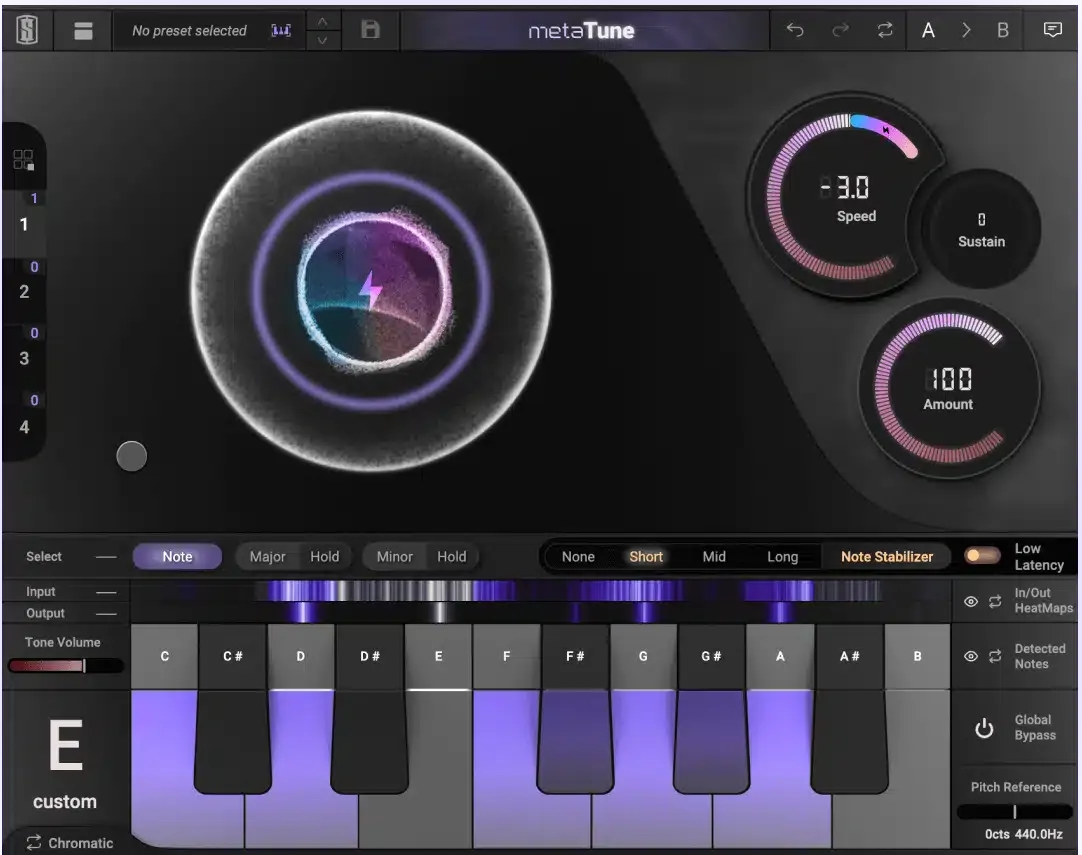
MetaTune by Slate Digital
MetaTune has become the most-discussed replacement among professional engineers. The workflow is immediately familiar — the interface logic is close enough to Auto-Tune that the learning curve is measured in minutes rather than sessions. Pitch correction quality is comparable at its best.
The practical advantages are significant. No stability issues. No iLok chaos. Included in Slate Digital's All Access subscription alongside SSL-modeled channel strips, compressors, Virtual Mix Rack, and more. For engineers already paying for an Auto-Tune subscription, the value comparison is uncomfortable for Antares.
MetaTune — $199 one-time or included in Slate All Access at ~$20/month
AutoTune 2026 — $300 one-time or $35/month subscription
Melodyne by Celemony
Melodyne takes a fundamentally different approach. Instead of a real-time insert, it works with audio transferred into its editor — giving complete visual access to every note, every pitch deviation, every piece of timing in a performance. You can see what you are fixing before you fix it.
For detailed editorial work — correcting individual phrases, reshaping phrasing, adjusting timing, cleaning up a lead vocal for a major release — Melodyne has no equal. Professional engineers on Gearspace consistently describe it as the standard tool for anything requiring precision. The trade-off is time: Melodyne is slower per vocal than a real-time insert. For sessions where speed matters more than surgical precision, a real-time option is the practical choice.
That split is worth keeping straight: everything else on this page tunes while you record, and Melodyne edits notes after. If it is the second category you actually need, the best Melodyne alternatives for manual note editing covers Vovious, RePitch 2 and the rest.
The Gearspace community's verdict is direct: "Melodyne won the tuning war years ago. I know a lot of producers and engineers personally — all of them use Melodyne."
Waves Tune Real-Time
Waves Tune Real-Time is the lightweight, affordable option for real-time transparent correction. It handles clean tuning well and is stable. Not the deepest feature set, but if what you need is "make this vocal stay in key without drama," it does the job.
Nuro by Accusonus / Xpitch
Mentioned regularly in professional forums as a modern alternative for real-time pitch correction with lower CPU overhead. Particularly noted for sounding natural on vocals that need subtle correction without any audible processing artefacts. Worth trying if MetaTune does not suit your workflow.
Pitch Correction vs Pitch Shifting — Not the Same Thing
A common point of confusion worth clarifying: pitch correction and pitch shifting are different tools for different problems.
Pitch Correction
Adjusts individual notes to the nearest correct pitch within a defined key. Works on performance-level inaccuracies. Auto-Tune, MetaTune, Melodyne — these are pitch correction tools.
Pitch Shifting
Moves the entire signal up or down by a defined amount — semitones, cents, or larger intervals. Used for harmonies, creative effects, or transposing a vocal to fit a new key. Different problem, different tool.
Using pitch shifting to "fix" an out-of-tune vocal is like using a sledgehammer to hang a picture frame. It will technically move the nail, but the results will be unpredictable. Pitch correction addresses individual notes. Pitch shifting moves everything at once.
Which Tool Is Right for Your Workflow?
The answer depends entirely on what you are doing with it:
Real-time correction on a mixing session
MetaTune (Slate Digital) — stable, familiar workflow, better value than AutoTune 2026
Detailed editorial work on a lead vocal
Melodyne — still the industry standard for precision, no real competition here
The classic T-Pain / Travis Scott effect
AutoTune Pro 11 or AutoTune 2026 with Classic Mode — the sound is still most authentic from the original
Budget-conscious, just needs clean tuning
Waves Tune Real-Time — affordable, stable, does what it says
You already pay for Slate All Access
MetaTune is already included — no reason to pay additionally for Auto-Tune
Full Comparison
| Plugin | Price | Best For |
|---|---|---|
| AutoTune 2026 | $300 / $35 mo | The classic Auto-Tune effect, real-time correction |
| AutoTune Pro 11 | $459 | Full Graph Mode, detailed manual editing |
| MetaTune (Slate) | $199 / ~$20 mo | Auto-Tune replacement, stable, great value |
| Melodyne Studio | $699 | Precision editorial, lead vocal work |
| Waves Tune RT | ~$50–100 | Budget real-time correction |
The Bottom Line
Auto-Tune is not going away. The sound is too embedded in too many genres, and AutoTune 2026 is a genuine attempt to fix the reliability problems that damaged the product's reputation. Whether it succeeds depends on whether Antares' engineering holds up in real sessions over the coming months — something the product's history gives some reason to be cautious about.
But for engineers who cannot afford to have a session fall apart over a plugin licensing issue, the conversation has moved. MetaTune for real-time correction, Melodyne for anything requiring precision — that is where the professional community has landed, and the landing looks stable.
The inventor of Auto-Tune almost left out the feature that made it famous. The engineers who built the alternatives that might replace it were probably not thinking about oil drilling when they started. Progress is strange.
Not sure what your track needs?
Send it and hear a free 60-second preview — an honest assessment and an exact price, no commitment.
Get a Free Preview →Want your track to sound like this?
Send it in and get a free preview — hear the difference on your own song before you pay anything.
Get a free preview →