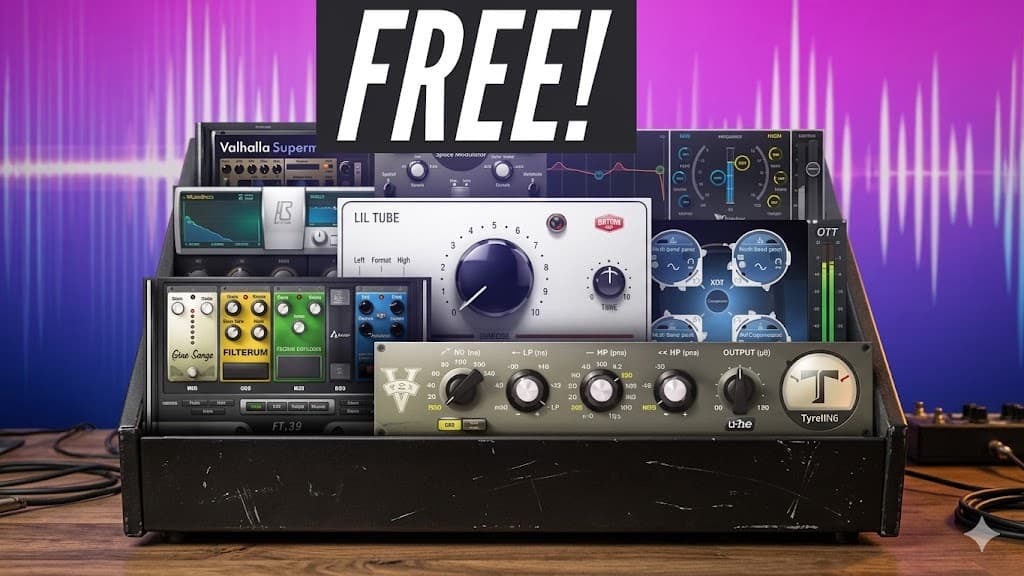
Can You Mix a Professional Track with Free Plugins Only?
A practical test — one full track, only free plugins, honest results. Here is what actually works and where the limitations start to show.
The Question Worth Asking
The plugin market has changed dramatically over the past few years. What used to require expensive hardware emulations or subscription bundles can now often be done — at least partially — with tools that cost nothing. The question is not whether free plugins exist. The question is whether they are good enough to produce professional results.
To find out, one full mixing session was run using only free tools — no paid plugins, no subscriptions, no exceptions. The session included a full band recording: electric guitar, bass, drums, keys, and lead vocal. The goal was a release-ready mix, not just something that sounds acceptable through laptop speakers.
Here is what happened.
The Free Plugin Stack
Before starting, a short list of the most capable free plugins available in 2025 was assembled. These are not obscure tools — they are well-known in the mixing community and genuinely used by professional engineers as secondary options or starting points.
EQ — TDR Nova by Tokyo Dawn Records
A dynamic EQ that rivals many paid options. Clean, transparent, and genuinely useful on any source. The free version covers the vast majority of mixing EQ needs.
Compression — Molot by vladg/sound
A Soviet-era inspired compressor with genuine character. Particularly useful on drums and bus compression where personality is part of the goal.
Reverb — Valhalla Supermassive
Free from Valhalla DSP — a company known for industry-standard paid reverbs. Supermassive is genuinely excellent for room sounds, plates, and atmospheric spaces.
Saturation — Saturation Knob by Softube
Simple and effective. A single knob that adds harmonic content and warmth — useful on guitars, vocals, and bass without complicating the signal chain.
Limiter — TDR Limiter 6 GE (free version)
The free version of TDR Limiter 6 is a capable mastering limiter. Transparent, with solid metering and a clean ceiling.
What Worked Well
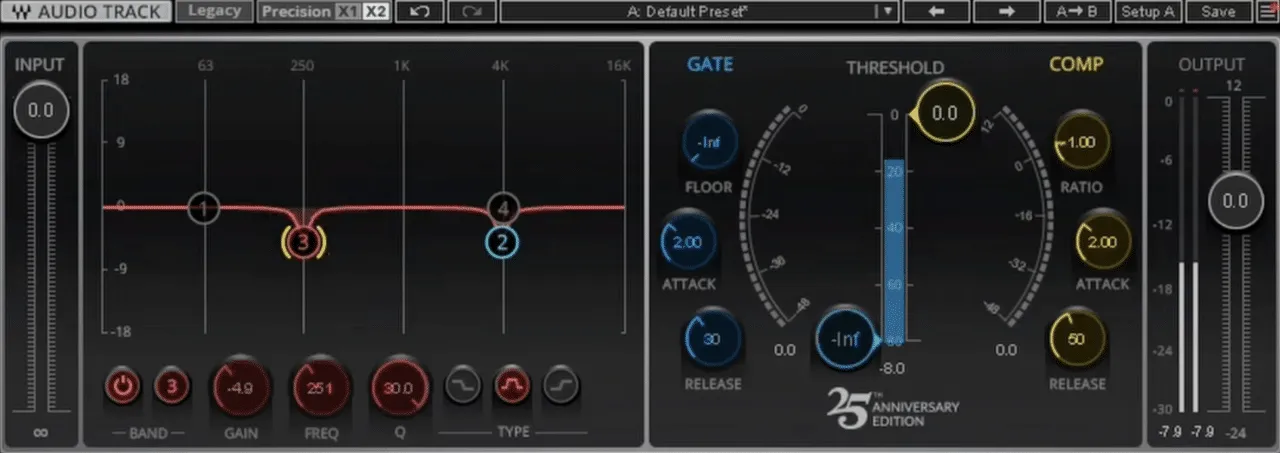
EQ and basic compression — TDR Nova handled the EQ work across every track with no compromises. The dynamic EQ capability meant it covered both static correction and dynamic control on a single instance. For basic mixing EQ work, it is genuinely competitive with paid options at several times the cost.
Reverb — Valhalla Supermassive is one of the best free audio plugins that has ever been released, full stop. The room and plate algorithms produced results that sat naturally in the mix without any of the metallic or artificial quality that budget reverbs typically introduce. On guitar and vocal sends, it was indistinguishable from much more expensive options.
Saturation — Adding harmonic content with the Softube Saturation Knob on the guitar bus and vocal channel produced the warmth and presence that separates a flat digital mix from something that feels like it has been recorded through real hardware. One plugin, one parameter, significant impact.
Where the Limitations Appeared
Multiband compression — The free toolset had no strong multiband compression option. On the drum bus and mix bus, managing low-end build-up and high-frequency harshness simultaneously required using multiple EQ passes where a single multiband compressor would have been cleaner and faster.
Stereo imaging — There is no free stereo imaging tool in this stack that competes with paid options like the iZotope Imager or Waves S1. Width management required workarounds — mid-side EQ inside TDR Nova and careful panning decisions — rather than precise control over the stereo field.
Mix bus processing — The final mix bus chain felt limited. Without a quality bus compressor that adds character — the kind of glue that tools like the SSL G-Bus or API 2500 emulations provide — the mix lacked some of the cohesion that ties a professional record together. Technically clean, but missing the final layer of polish.
The Honest Verdict
A professional-sounding mix is achievable with free plugins — but with an important qualification. Free tools can take you 85 to 90 percent of the way there. The gap between free and paid is real but it is narrower than it has ever been.
For independent artists working on their own material, a free plugin stack built around TDR Nova, Valhalla Supermassive, and Molot is a legitimate starting point that produces results worth releasing. The knowledge and judgment of the engineer matters far more than the cost of the tools.
Where paid plugins earn their cost is in specific, targeted areas — multiband dynamics, mix bus character, stereo imaging, and de-noising. These are tools that solve problems efficiently rather than elegantly. If you find yourself working around a limitation repeatedly, that is the signal that a specific paid tool is worth the investment.
If you want to hear the difference a professional mixing chain makes on your material — send the track. The first listen is always free.
Free Plugin Recommendations — Quick Reference
- → EQ: TDR Nova — dynamic EQ, transparent, genuinely professional
- → Compression: Molot — character compressor, great on drums and bus
- → Reverb: Valhalla Supermassive — the best free reverb available, period
- → Saturation: Softube Saturation Knob — simple, effective, one knob
- → Limiting: TDR Limiter 6 — clean ceiling, solid metering
Not sure what your track needs?
Send it and hear a free 60-second preview — an honest assessment and an exact price, no commitment.
Get a Free Preview →Want your track to sound like this?
Send it in and get a free preview — hear the difference on your own song before you pay anything.
Get a free preview →