My Reverb & Delay Chain for Vocals — The Setup I Use on Every Mix
Most vocal mixes sound washed out for one reason: reverb stacked on reverb with no system behind it. Here is the five-send chain that fixed that for me — and how I actually use it.
Why Most Vocal Mixes Sound Washed Out
The problem is almost never that you are using reverb. It is that you are using too many different reverbs in too many different places with no system behind them. When you put reverb directly on the channel, stack another instance on a bus, and throw a delay on top of that — each one starts fighting the others for space. The vocal gets buried, the mix loses clarity, and no amount of EQ will dig you out of that hole.
I see this in sessions regularly. A vocal that sounds great dry becomes unrecognisable once the effects are on — not because the reverbs are bad, but because there is no logic connecting them. Each plugin is making its own decision about where the vocal should live in space, and the result is a mess.
The fix is simpler than most people think: build a send system, set it once, and blend to taste for every mix. Here is mine.
The System: Five Sends, Always Ready
I keep five sends set up in every session before a single track gets loaded. Room, plate, microshift, delay, chamber. Each one does something specific. None of them overlap. Together they cover everything a vocal needs in three-dimensional space.
Everything starts at zero. All five sends are at zero when I open a new session. Then I play the song and slowly bring each one up until I hear it contributing — not until I hear the effect itself, but until I hear the vocal respond. That distinction matters more than any specific setting.
The Five Sends
01 — Room (Seventh Heaven / Bricasti)
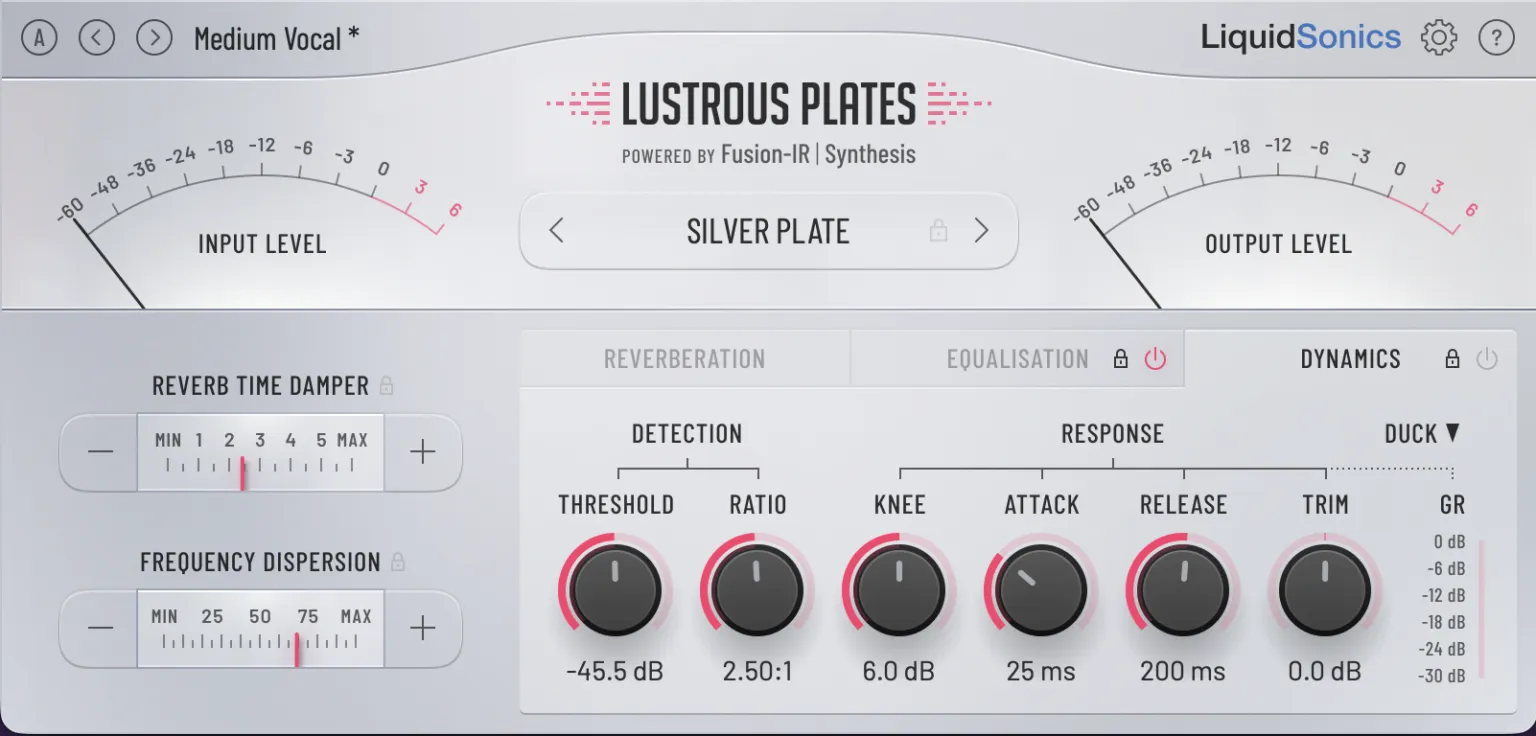
02 — Plate (Lustrous Plates / Liquid Sonics)
03 — Microshift (Eventide H3000)
04 — Eighth Note Delay (Waves Repeater)
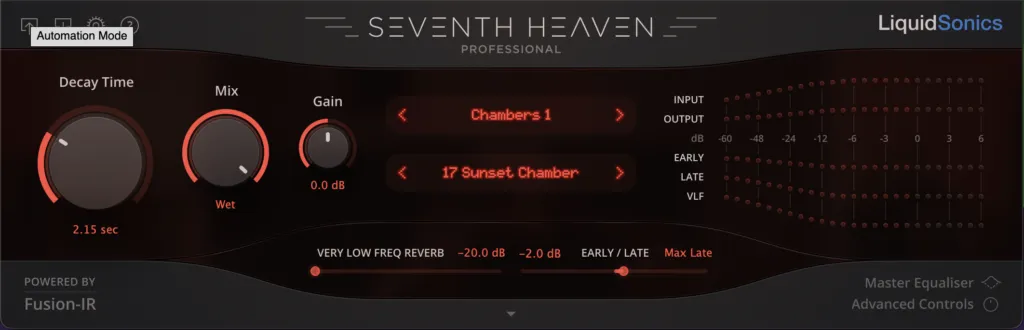
05 — Chamber (Seventh Heaven / Bricasti)
Send 1 — Room
Plugin: Seventh Heaven by Liquid Sonics — Bricasti M7 emulation
The room is the foundation of the whole chain. It is the first thing I reach for and the send I am most careful not to overdo. The Bricasti hardware is one of the most respected reverb units in professional studio work, and Seventh Heaven gets remarkably close to it in software.
I use the Studio A room setting with a decay time around 0.70 seconds. Short, natural, present. The goal here is not to hear the reverb — it is to feel the vocal sitting in a physical space. If you can point to the room reverb and say "there it is," it is too much. Pull it back until the dry vocal feels slightly unnatural without it. That is the level.
The room reverb is what separates a vocal that sounds recorded in a real space from one that sounds like it was tracked in a closet. Even 10% blend makes the difference. The listener will never identify it — they will just feel that something is right.
Send 2 — Plate
Plugin: Lustrous Plates by Liquid Sonics (included in the Slate Digital All Access bundle)
The plate is where the character of the vocal starts to come through. Where the room adds physical space, the plate adds musical warmth and dimension. Lustrous Plates is genuinely one of the best-sounding plate reverbs available — smooth, musical, and it sits in a mix without drawing attention to itself the way cheaper plates tend to.
The feature I rely on most here is the tempo-synced pre-delay. Locking the pre-delay to the BPM of the track makes a significant difference in how well the reverb grooves with the song. I usually start at a 16th note triplet — it creates just enough separation between the dry vocal and the reverb tail to keep the transient clear without the reverb feeling detached. If the song has a looser feel I might move to a straight 16th. If it is uptempo and tight, I go shorter.
The built-in EQ and dynamic control in Lustrous Plates also means I rarely need to add anything on top. High-pass the low end of the reverb return to stop it muddying the low mids, pull a little off the top if it gets harsh — everything else the preset usually handles well.
Send 3 — Microshift
Plugin: Eventide MicroShift — H3000 MicroPitch setting
This is the one people most often leave out — and the one that most often makes the difference between a vocal that sounds wide and a vocal that sounds small. The MicroShift is not a reverb and it is not a traditional chorus. It is a subtle pitch-spread effect that makes a vocal feel three-dimensional without adding any visible reverb tail.
The H3000 MicroPitch setting works by shifting two detuned copies of the vocal very slightly — one up, one down, each delayed by a few milliseconds. The result sounds like the vocal is occupying more physical space than it actually does. Used lightly as a send rather than an insert, it adds width that feels organic rather than processed. Push it too hard and it starts to sound like an obvious effect. At the right level you will never be able to point to it — you will just notice the vocal sounds more present and three-dimensional than before.
Eventide plugins in general are significantly underused in most workflows. The H9 series specifically has some of the most useful and distinctive processing available at any price point.
Send 4 — Eighth Note Delay
Plugin: Waves Repeater — CLA-inspired eighth note preset
The eighth note delay is the send that most directly controls the energy and width of the vocal in the mix. A well-placed delay makes the vocal feel larger without feeling cluttered. A poorly placed one turns the whole mix into an echo chamber.
The Waves Repeater preset I use is close to a straight eighth note but not quite — the slight imprecision is actually part of what makes it feel musical rather than mechanical. The key to making it work is the routing: I send the eighth note delay into the plate reverb send. The delay feeds into the reverb, which washes out the repeats so they blend into the space rather than sitting on top of everything. You get all the width and dimension the delay creates without the slap feeling aggressive or distracting.
The routing trick: delay send → plate reverb send. The delay feeds into the plate instead of running dry. The repeats get washed and blend into the space. This one change turns a distracting delay into something that just makes the mix feel bigger.
Send 5 — Chamber
Plugin: Seventh Heaven — Sunset Chamber setting
The chamber is the deepest of the three reverbs and the one I interfere with the least after setting it up. Where the room gives physical presence and the plate gives musical character, the chamber gives depth — the sense that the vocal exists inside a larger space than the song itself.
Same approach as the plate: pre-delay synced to the BPM of the track. Once that is set and the blend level is dialled in, I mostly leave it. The chamber tends to be the most subtle of the three reverbs in isolation but the most noticeable when you bypass it — which is exactly where you want a mix element to live.
Together, the room, plate, and chamber each contribute something different to the spatial picture of the vocal. Blending small amounts of all three creates the kind of depth that is very difficult to achieve with a single reverb at any setting.
How I Actually Use These Sends in a Mix
Everything starts at zero. All five sends are at zero when I open a session. I play the song and bring each send up slowly — not to a specific number, but until I hear the vocal responding to it. The level that works depends entirely on the song, the production density, and what the vocal needs.
Dense productions need less reverb — there is already a lot happening in the mid-range and the reverb tails will fight the other elements for space. Sparse arrangements can carry more reverb because there is room for it. Folk, acoustic, and singer-songwriter material often benefits from more plate and chamber. Hip-hop and pop usually need the plate pulled back and the microshift pushed forward. Blues and rock sit somewhere in the middle — the room and chamber do most of the work, the plate adds just enough shine on the top end.
The point of having a system is not that the settings are the same every time. It is that the decisions are the same every time. You are always asking: how much room does this vocal need? Where does it need to sit in the stereo field? How deep should the tail be? The sends give you one knob for each question. That simplicity is what makes sessions move quickly.
The System at a Glance
Room
Seventh Heaven — Studio A, 0.70s decay
Physical presence — feel, not hear
Plate
Lustrous Plates — tempo-synced pre-delay
Musical warmth and vocal character
Microshift
Eventide H3000 MicroPitch
Width and three-dimensional presence
Delay
Waves Repeater — eighth note → feeds plate
Energy, width, sense of scale
Chamber
Seventh Heaven — Sunset Chamber
Depth — the space behind the space
One More Thing — The Chorus Trick
When a chorus needs to hit harder — when the production lifts and the vocal needs to feel bigger and more open — I reach for one additional send that I do not use in verses: a longer, lusher plate setting with more pre-delay and a slightly brighter character.
The approach is simple: automate the send level so it comes up only on the chorus. The same vocal, the same chain, but now there is more air and depth behind it. When you come back to the verse and that send drops away, the vocal feels more intimate and focused. The contrast is what makes both sections hit harder than either would on its own.
This is one of those techniques that sounds obvious when you describe it but makes an immediate difference when you hear it in context. Try it on the next session where the chorus feels like it is not quite landing the way it should.
The Underlying Logic
Reverb and delay are not decoration. They are spatial tools — they tell the listener where the vocal exists in physical space. Used with a system, they create depth, width, and dimension that makes a professional mix feel like it was recorded in a real, coherent space. Used without a system, they compete with each other and cloud everything they touch.
Build the sends once. Learn what each one does. Then mix by feel — which is exactly how it should work.
Not sure what your track needs?
Send it and hear a free 60-second preview — an honest assessment and an exact price, no commitment.
Get a Free Preview →Want your track to sound like this?
Send it in and get a free preview — hear the difference on your own song before you pay anything.
Get a free preview →